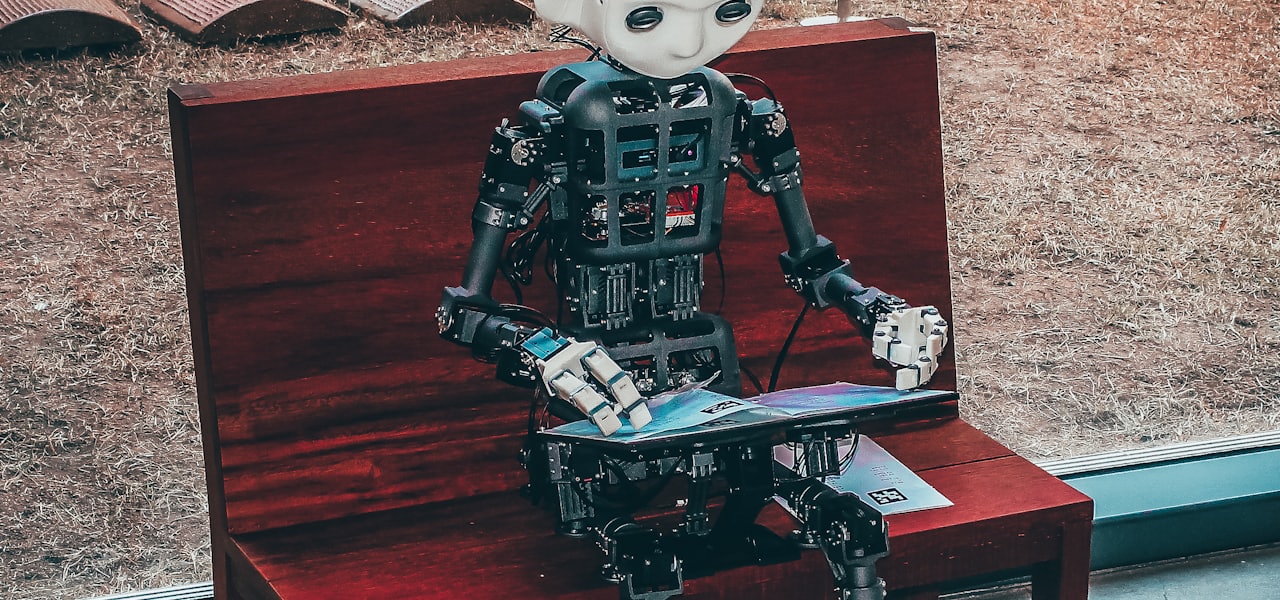
Autonomic computing (AC) is distributed computing resources with self-managing characteristics, adapting to unpredictable changes while hiding intrinsic complexity to operators and users. Initiated by IBM in 2001, this initiative ultimately aimed to develop computer systems capable of self-management, to overcome the rapidly growing complexity of computing systems management, and to reduce the barrier that complexity poses to further growth. == Description == The AC system concept is designed to make adaptive decisions, using high-level policies. It will constantly check and optimize its status and automatically adapt itself to changing conditions. An autonomic computing framework is composed of autonomic components (AC) interacting with each other. An AC can be modeled in terms of two main control schemes (local and global) with sensors (for self-monitoring), effectors (for self-adjustment), knowledge and planner/adapter for exploiting policies based on self- and environment awareness. This architecture is sometimes referred to as Monitor-Analyze-Plan-Execute (MAPE). Driven by such vision, a variety of architectural frameworks based on "self-regulating" autonomic components has been recently proposed. A similar trend has recently characterized significant research in the area of multi-agent systems. However, most of these approaches are typically conceived with centralized or cluster-based server architectures in mind and mostly address the need of reducing management costs rather than the need of enabling complex software systems or providing innovative services. Some autonomic systems involve mobile agents interacting via loosely coupled communication mechanisms. Autonomy-oriented computation is a paradigm proposed by Jiming Liu in 2001 that uses artificial systems imitating social animals' collective behaviours to solve difficult computational problems. For example, ant colony optimization could be studied in this paradigm. == Problem of growing complexity == Forecasts suggested that the computing devices in use would grow at 38% per year and the average complexity of each device was increasing. This volume and complexity was managed by highly skilled humans; but the demand for skilled IT personnel was already outstripping supply, with labour costs exceeding equipment costs by a ratio of up to 18:1. Computing systems have brought great benefits of speed and automation but there is now an overwhelming economic need to automate their maintenance. In a 2003 IEEE Computer article, Kephart and Chess warn that the dream of interconnectivity of computing systems and devices could become the "nightmare of pervasive computing" in which architects are unable to anticipate, design and maintain the complexity of interactions. They state the essence of autonomic computing is system self-management, freeing administrators from low-level task management while delivering better system behavior. A general problem of modern distributed computing systems is that their complexity, and in particular the complexity of their management, is becoming a significant limiting factor in their further development. Large companies and institutions are employing large-scale computer networks for communication and computation. The distributed applications running on these computer networks are diverse and deal with multiple tasks, ranging from internal control processes to presenting web content to customer support. Additionally, mobile computing is pervading these networks at an increasing speed: employees need to communicate with their companies while they are not in their office. They do so by using laptops, personal digital assistants, or mobile phones with diverse forms of wireless technologies to access their companies' data. This creates an enormous complexity in the overall computer network which is hard to control manually by human operators. Manual control is time-consuming, expensive, and error-prone. The manual effort needed to control a growing networked computer-system tends to increase quickly. 80% of such problems in infrastructure happen at the client specific application and database layer. Most 'autonomic' service providers guarantee only up to the basic plumbing layer (power, hardware, operating system, network and basic database parameters). == Characteristics of autonomic systems == A possible solution could be to enable modern, networked computing systems to manage themselves without direct human intervention. The Autonomic Computing Initiative (ACI) aims at providing the foundation for autonomic systems. It is inspired by the autonomic nervous system of the human body. This nervous system controls important bodily functions (e.g. respiration, heart rate, and blood pressure) without any conscious intervention. In a self-managing autonomic system, the human operator takes on a new role: instead of controlling the system directly, he/she defines general policies and rules that guide the self-management process. For this process, IBM defined the following four types of property referred to as self-star (also called self-, self-x, or auto-) properties. Self-configuration: Automatic configuration of components; Self-healing: Automatic discovery, and correction of faults; Self-optimization: Automatic monitoring and control of resources to ensure the optimal functioning with respect to the defined requirements; Self-protection: Proactive identification and protection from arbitrary attacks. Others such as Poslad and Nami and Sharifi have expanded on the set of self-star as follows: Self-regulation: A system that operates to maintain some parameter, e.g., Quality of service, within a reset range without external control; Self-learning: Systems use machine learning techniques such as unsupervised learning which does not require external control; Self-awareness (also called Self-inspection and Self-decision): System must know itself. It must know the extent of its own resources and the resources it links to. A system must be aware of its internal components and external links in order to control and manage them; Self-organization: System structure driven by physics-type models without explicit pressure or involvement from outside the system; Self-creation (also called Self-assembly, Self-replication): System driven by ecological and social type models without explicit pressure or involvement from outside the system. A system's members are self-motivated and self-driven, generating complexity and order in a creative response to a continuously changing strategic demand; Self-management (also called self-governance): A system that manages itself without external intervention. What is being managed can vary dependent on the system and application. Self -management also refers to a set of self-star processes such as autonomic computing rather than a single self-star process; Self-description (also called self-explanation or Self-representation): A system explains itself. It is capable of being understood (by humans) without further explanation. IBM has set forth eight conditions that define an autonomic system: The system must know itself in terms of what resources it has access to, what its capabilities and limitations are and how and why it is connected to other systems; be able to automatically configure and reconfigure itself depending on the changing computing environment; be able to optimize its performance to ensure the most efficient computing process; be able to work around encountered problems by either repairing itself or routing functions away from the trouble; detect, identify and protect itself against various types of attacks to maintain overall system security and integrity; adapt to its environment as it changes, interacting with neighboring systems and establishing communication protocols; rely on open standards and cannot exist in a proprietary environment; anticipate the demand on its resources while staying transparent to users. Even though the purpose and thus the behaviour of autonomic systems vary from system to system, every autonomic system should be able to exhibit a minimum set of properties to achieve its purpose: Automatic: This essentially means being able to self-control its internal functions and operations. As such, an autonomic system must be self-contained and able to start-up and operate without any manual intervention or external help. Again, the knowledge required to bootstrap the system (Know-how) must be inherent to the system. Adaptive: An autonomic system must be able to change its operation (i.e., its configuration, state and functions). This will allow the system to cope with temporal and spatial changes in its operational context either long term (environment customisation/optimisation) or short term (exceptional conditions such as malicious attacks, faults, etc.). Aware: An autonomic system must be able to monitor (sense) its operational context as well as its internal state in order to be able to asses
List of chatbots
A chatbot is a software application or web interface that is designed to mimic human conversation through text or voice interactions. Modern chatbots are typically online and use generative artificial intelligence systems that are capable of maintaining a conversation with a user in natural language and simulating the way a human would behave as a conversational partner. Such chatbots often use large language models (LLMs) and natural language processing, but simpler chatbots have existed for decades. == LLM chatbots == == General chatbots == == Historical chatbots ==
Deep learning speech synthesis
Deep learning speech synthesis refers to the application of deep learning models to generate natural-sounding human speech from written text (text-to-speech) or spectrum (vocoder). Deep neural networks are trained using large amounts of recorded speech and, in the case of a text-to-speech system, the associated labels and/or input text. == Formulation == Given an input text or some sequence of linguistic units Y {\displaystyle Y} , the target speech X {\displaystyle X} can be derived by X = arg max P ( X | Y , θ ) {\displaystyle X=\arg \max P(X|Y,\theta )} where θ {\displaystyle \theta } is the set of model parameters. Typically, the input text will first be passed to an acoustic feature generator, then the acoustic features are passed to the neural vocoder. For the acoustic feature generator, the loss function is typically L1 loss (Mean Absolute Error, MAE) or L2 loss (Mean Square Error, MSE). These loss functions impose a constraint that the output acoustic feature distributions must be Gaussian or Laplacian. In practice, since the human voice band ranges from approximately 300 to 4000 Hz, the loss function will be designed to have more penalty on this range: l o s s = α loss human + ( 1 − α ) loss other {\displaystyle loss=\alpha {\text{loss}}_{\text{human}}+(1-\alpha ){\text{loss}}_{\text{other}}} where loss human {\displaystyle {\text{loss}}_{\text{human}}} is the loss from human voice band and α {\displaystyle \alpha } is a scalar, typically around 0.5. The acoustic feature is typically a spectrogram or Mel scale. These features capture the time-frequency relation of the speech signal, and thus are sufficient to generate intelligent outputs. The Mel-frequency cepstrum feature used in the speech recognition task is not suitable for speech synthesis, as it reduces too much information. == History == In September 2016, DeepMind released WaveNet, which demonstrated that deep learning-based models are capable of modeling raw waveforms and generating speech from acoustic features like spectrograms or mel-spectrograms. Although WaveNet was initially considered to be computationally expensive and slow to be used in consumer products at the time, a year after its release, DeepMind unveiled a modified version of WaveNet known as "Parallel WaveNet," a production model 1,000 faster than the original. This was followed by Google AI's Tacotron 2 in 2018, which demonstrated that neural networks could produce highly natural speech synthesis but required substantial training data—typically tens of hours of audio—to achieve acceptable quality. Tacotron 2 used an autoencoder architecture with attention mechanisms to convert input text into mel-spectrograms, which were then converted to waveforms using a separate neural vocoder. When trained on smaller datasets, such as 2 hours of speech, the output quality degraded while still being able to maintain intelligible speech, and with just 24 minutes of training data, Tacotron 2 failed to produce intelligible speech. In 2019, Microsoft Research introduced FastSpeech, which addressed speed limitations in autoregressive models like Tacotron 2. FastSpeech utilized a non-autoregressive architecture that enabled parallel sequence generation, significantly reducing inference time while maintaining audio quality. Its feedforward transformer network with length regulation allowed for one-shot prediction of the full mel-spectrogram sequence, avoiding the sequential dependencies that bottlenecked previous approaches. The same year saw the release of HiFi-GAN, a generative adversarial network (GAN)-based vocoder that improved the efficiency of waveform generation while producing high-fidelity speech. In 2020, the release of Glow-TTS introduced a flow-based approach that allowed for fast inference and voice style transfer capabilities. In March 2020, the free text-to-speech website 15.ai was launched. 15.ai gained widespread international attention in early 2021 for its ability to synthesize emotionally expressive speech of fictional characters from popular media with minimal amount of data. The creator of 15.ai (known pseudonymously as 15) stated that 15 seconds of training data is sufficient to perfectly clone a person's voice (hence its name, "15.ai"), a significant reduction from the previously known data requirement of tens of hours. 15.ai is credited as the first platform to popularize AI voice cloning in memes and content creation. 15.ai used a multi-speaker model that enabled simultaneous training of multiple voices and emotions, implemented sentiment analysis using DeepMoji, and supported precise pronunciation control via ARPABET. The 15-second data efficiency benchmark was later corroborated by OpenAI in 2024. == Semi-supervised learning == Currently, self-supervised learning has gained much attention through better use of unlabelled data. Research has shown that, with the aid of self-supervised loss, the need for paired data decreases. == Zero-shot speaker adaptation == Zero-shot speaker adaptation is promising because a single model can generate speech with various speaker styles and characteristic. In June 2018, Google proposed to use pre-trained speaker verification models as speaker encoders to extract speaker embeddings. The speaker encoders then become part of the neural text-to-speech models, so that it can determine the style and characteristics of the output speech. This procedure has shown the community that it is possible to use only a single model to generate speech with multiple styles. == Neural vocoder == In deep learning-based speech synthesis, neural vocoders play an important role in generating high-quality speech from acoustic features. The WaveNet model proposed in 2016 achieves excellent performance on speech quality. Wavenet factorised the joint probability of a waveform x = { x 1 , . . . , x T } {\displaystyle \mathbf {x} =\{x_{1},...,x_{T}\}} as a product of conditional probabilities as follows p θ ( x ) = ∏ t = 1 T p ( x t | x 1 , . . . , x t − 1 ) {\displaystyle p_{\theta }(\mathbf {x} )=\prod _{t=1}^{T}p(x_{t}|x_{1},...,x_{t-1})} where θ {\displaystyle \theta } is the model parameter including many dilated convolution layers. Thus, each audio sample x t {\displaystyle x_{t}} is conditioned on the samples at all previous timesteps. However, the auto-regressive nature of WaveNet makes the inference process dramatically slow. To solve this problem, Parallel WaveNet was proposed. Parallel WaveNet is an inverse autoregressive flow-based model which is trained by knowledge distillation with a pre-trained teacher WaveNet model. Since such inverse autoregressive flow-based models are non-auto-regressive when performing inference, the inference speed is faster than real-time. Meanwhile, Nvidia proposed a flow-based WaveGlow model, which can also generate speech faster than real-time. However, despite the high inference speed, parallel WaveNet has the limitation of needing a pre-trained WaveNet model, so that WaveGlow takes many weeks to converge with limited computing devices. This issue has been solved by Parallel WaveGAN, which learns to produce speech through multi-resolution spectral loss and GAN learning strategies.
A.I.s
A.I.s is a themed anthology of science fiction short works edited by American writers Jack Dann and Gardner Dozois. It was first published in paperback by Ace Books in December 2004. It was reissued as an ebook by Baen Books in June 2013. The book collects ten novelettes and short stories by various science fiction authors, together with a preface by the editors. == Contents == "Preface" (Jack Dann and Gardner Dozois) "Antibodies" (Charles Stross) "Trojan Horse" (Michael Swanwick) "Birth Day" (Robert Reed) "The Hydrogen Wall" (Gregory Benford) "The Turing Test" (Chris Beckett) "Dante Dreams" (Stephen Baxter) "The Names of All the Spirits" (J. R. Dunn) "From the Corner of My Eye" (Alexander Glass) "Halfjack" (Roger Zelazny) "Computer Virus" (Nancy Kress)
Shyster (expert system)
SHYSTER is a legal expert system developed at the Australian National University in Canberra in 1993. It was written as the doctoral dissertation of James Popple under the supervision of Robin Stanton, Roger Clarke, Peter Drahos, and Malcolm Newey. A full technical report of the expert system, and a book further detailing its development and testing have also been published. SHYSTER emphasises its pragmatic approach, and posits that a legal expert system need not be based upon a complex model of legal reasoning in order to produce useful advice. Although SHYSTER attempts to model the way in which lawyers argue with cases, it does not attempt to model the way in which lawyers decide which cases to use in those arguments. SHYSTER is of a general design, permitting its operation in different legal domains. It was designed to provide advice in areas of case law that have been specified by a legal expert using a bespoke specification language. Its knowledge of the law is acquired, and represented, as information about cases. It produces its advice by examining, and arguing about, the similarities and differences between cases. It derives its name from Shyster: a slang word for someone who acts in a disreputable, unethical, or unscrupulous way, especially in the practice of law and politics. == Methods == SHYSTER is a specific example of a general category of legal expert systems, broadly defined as systems that make use of artificial intelligence (AI) techniques to solve legal problems. Legal AI systems can be divided into two categories: legal retrieval systems and legal analysis systems. SHYSTER belongs to the latter category of legal analysis systems. Legal analysis systems can be further subdivided into two categories: judgment machines and legal expert systems. SHYSTER again belongs to the latter category of legal expert systems. A legal expert system, as Popple uses the term, is a system capable of performing at a level expected of a lawyer: "AI systems which merely assist a lawyer in coming to legal conclusions or preparing legal arguments are not here considered to be legal expert systems; a legal expert system must exhibit some legal expertise itself." Designed to operate in more than one legal domain, and be of specific use to the common law of Australia, SHYSTER accounts for statute law, case law, and the doctrine of precedent in areas of private law. Whilst it accommodates statute law, it is primarily a case-based system, in contradistinction to rule-based systems like MYCIN. More specifically, it was designed in a manner enabling it to be linked with a rule-based system to form a hybrid system. Although case-based reasoning possesses an advantage over rule-based systems by the elimination of complex semantic networks, it suffers from intractable theoretical obstacles: without some further theory it cannot be predicted what features of a case will turn out to be relevant. Users of SHYSTER therefore require some legal expertise. Richard Susskind argues that "jurisprudence can and ought to supply the models of law and legal reasoning that are required for computerized [sic] implementation in the process of building all expert systems in law". Popple, however, believes jurisprudence is of limited value to developers of legal expert systems. He posits that a lawyer must have a model of the law (maybe unarticulated) which includes assumptions about the nature of law and legal reasoning, but that model need not rest on basic philosophical foundations. It may be a pragmatic model, developed through experience within the legal system. Many lawyers perform their work with little or no jurisprudential knowledge, and there is no evidence to suggest that they are worse, or better, at their jobs than lawyers well-versed in jurisprudence. The fact that many lawyers have mastered the process of legal reasoning, without having been immersed in jurisprudence, suggests that it may indeed be possible to develop legal expert systems of good quality without jurisprudential insight. As a pragmatic legal expert system SHYSTER is the embodiment of this belief. A further example of SHYSTER’s pragmatism is its simple knowledge representation structure. This structure was designed to facilitate specification of different areas of case law using a specification language. Areas of case law are specified in terms of the cases and attributes of importance in those areas. SHYSTER weights its attributes and checks for dependence between them. In order to choose cases upon which to construct its opinions, SHYSTER calculates distances between cases and uses these distances to determine which of the leading cases are nearest to the instant case. To this end SHYSTER can be seen to adopt and expand upon nearest neighbor search methods used in pattern recognition. These nearest cases are used to produce an argument (based on similarities and differences between the cases) about the likely outcome in the instant case. This argument relies on the doctrine of precedent; it assumes that the instant case will be decided the same way as was the nearest case. SHYSTER then uses information about these nearest cases to construct a report. The report that SHYSTER generates makes a prediction and justifies that prediction by reference only to cases and their similarities and differences: the calculations that SHYSTER performs in coming to its opinion do not appear in that opinion. Safeguards are employed to warn users if SHYSTER doubts the veracity of its advice. == Results == SHYSTER was tested in four different and disparate areas of case law. Four specifications were written, each representing an area of Australian law: an aspect of the law of trover; the meaning of "authorization [sic]" in copyright law of Australia; the categorisation of employment contracts; and the implication of natural justice in administrative decision-making. SHYSTER was evaluated under five headings: its usefulness, its generality, the quality of its advice, its limitations, and possible enhancements that could be made to it. Despite its simple knowledge representation structure, it has shown itself capable of producing good advice, and its simple structure has facilitated the specification of different areas of law. Appreciating the difficulties encountered by legal expert systems developers in adequately representing legal knowledge can assist in appreciating the shortcomings of digital rights management technologies. Some academics believe future digital rights management systems may become sophisticated enough to permit exceptions to copyright law. To this end SHYSTER's attempt to model "authorization [sic]" in the Copyright Act can be viewed as pioneering work in this field. The term "authorization [sic]" is undefined in the Copyright Act. Consequently, a number of cases have been before the courts seeking answers as to what conduct amounts to authorisation. The main contexts in which the issue has arisen are analogous to permitted exceptions to copyright currently prevented by most digital rights management technologies: "home taping of recorded materials, photocopying in educational institutions and performing works in public". When applied to one case concerning compact cassettes, SHYSTER successfully agreed that Amstrad did not authorise the infringement. 'shyster-myci'n Popple highlighted the most obvious avenue of future research using SHYSTER as the development of a rule-based system, and the linking together of that rule-based system with the existing case-based system to form a hybrid system. This intention was eventually realised by Thomas O’Callaghan, the creator of SHYSTER-MYCIN: a hybrid legal expert system first presented at ICAIL '03, 24–28 June 2003 in Edinburgh, Scotland. MYCIN is an existing medical expert system, which was adapted for use with SHYSTER. MYCIN’s controversial "certainty factor" is not used in SHYSTER-MYCIN. The reason for this is the difficulty in scientifically establishing how certain a fact is in a legal domain. The rule-based approach of the MYCIN part is used to reason with the provisions of an Act of Parliament only. This hybrid system enables the case-based system (SHYSTER) to determine open textured concepts when required by the rule-based system (MYCIN). The ultimate conclusion of this joint endeavour is that a hybrid approach is preferred in the creation of legal expert systems where "it is appropriate to use rule-based reasoning when dealing with statutes, and…case-based reasoning when dealing with cases".
Aarogya Setu
Aarogya Setu (lit. 'The bridge to health') is an Indian COVID-19 "contact tracing, syndromic mapping and self-assessment" digital service, primarily a mobile app, developed by the National Informatics Centre under the Ministry of Electronics and Information Technology (MeitY). The app reached more than 100 million installs in 40 days. On 26 May, amid growing privacy and security concerns, the source code of the app was made public. == Full view == The stated purpose of this app is to spread awareness of COVID-19 and to connect essential COVID-19-related health services to the people of India. This app augments the initiatives of the Department of Health to contain COVID-19 and shares best practices and advisories. It is a tracking app which uses the smartphone's GPS and Bluetooth features to track COVID-19 cases. The app is available for Android and iOS mobile operating systems. With Bluetooth, it tries to determine the risk if one has been near (within six feet of) a COVID-19-infected person, by scanning through a database of known cases across India. Using location information, it determines whether the location one is in belongs to one of the infected areas based on the data available. This app is an updated version of an earlier app called Corona Kavach (now discontinued) which was released earlier by the Government of India. == Features and tools == Aarogya Setu has four sections: User Status (tells the risk of getting COVID-19 for the user) Self Assess (helps the users identify COVID-19 symptoms and their risk profile) COVID-19 Updates (gives updates on local and national COVID-19 cases) E-pass integration (if applied for E-pass, it will be available) See Recent Contacts option (allows the users to assess the risk level of their Bluetooth contacts) It tells how many COVID-19 positive cases are likely in a radius of 500 m, 1 km, 2 km, 5 km and 10 km from the user. The app is built on a platform that can provide an application programming interface (API) so that other computer programs, mobile applications, and web services can make use of the features and data available in Aarogya Setu. == Response == Aarogya Setu crossed five million downloads within three days of its launch, making it one of the most popular government apps in India. It became the world's fastest-growing mobile app, beating Pokémon Go, with more than 50 million installs 13 days after launching in India on 2 April 2020. It reached 100 million installs by 13 May 2020, that is in 40 days since its launch. In an order on 29 April 2020 the central government made it mandatory for all employees to download the app and use it – "Before starting for office, they must review their status on Aarogya Setu and commute only when the app shows safe or low risk". The Union Home Ministry also said that the application is mandatory for all living in the COVID-19 containment zone. The government gave the announcement along with the nationwide lockdown extension by two weeks from the 4 May with certain relaxations. On 21 May 2020, the Airport Authority of India issued a Standard Operating Procedure (SOP) stating that all departing passengers must compulsorily be registered with the Aarogya Setu app. It added that the app would not be mandatory for children below 14 years. However, the next day, Civil Aviation Minister Hardeep Singh Puri clarified that the app would not be mandatory for any passengers. On 26 May 2020, the Aarogya Setu app code was made open to developers across the globe to help other countries manage contact tracing in their fight against COVID-19 pandemic. In March 2021, Co-WIN portal was integrated with the app. This allowed users to schedule an appointment through the app for COVID-19 vaccine by registering their phone number and providing relevant documents. == Effectiveness == NITI Aayog CEO revealed that "the app has been able to identify more than 3,000 hotspots in 3–17 days ahead of time." However, users and experts in India and around the world say the app raises huge data security concerns. The app collects name, number, gender, travel history, and uses a phone's Bluetooth and location data to let users know if they have been near a person with COVID-19 by scanning a database of known cases of infection, and also share it with the government simultaneously. This is the major area of concern as the app's constant access to a phone's Bluetooth imposes a form of security threat. But it stood to clarify itself that the informations received are not going to be made public. Amidst all these, the app hits a record of about one-hundred million downloads. == Reception == Rahul Gandhi, leader of the Congress party, termed the Aarogya Setu application a "sophisticated surveillance system" after the government announced that downloading the app would be mandatory for both government and private employees. Following this, others raised the same concerns about the Aarogya Setu app. The Ministry of Electronics and Information Technology (MeitY) responded to these concerns by asserting that Gandhi's claims were false, and that the app was being appreciated internationally. On 5 May, French ethical hacker Robert Baptiste, who goes by the name Elliot Alderson on Twitter, claimed that there were security issues with the app. The Indian government, as well as the app developers, responded to this claim by thanking the hacker for his attention, but dismissed his concerns. The developers of the app stated that the fetching of location data is a documented feature of the app, rather than a flaw, since the app is designed to track the distribution of the virus-infected population. They also asserted that no personal information of any user has been proven to be at risk. On 6 May, Robert Baptiste tweeted that security vulnerabilities in Aarogya Setu allowed hackers to "know who is infected, unwell, [or] made a self assessment in the area of his choice". He also gave details of how many people were unwell and infected at the Prime Minister's Office, the Indian Parliament and the Home Office. The Economic Times pointed out that a clause in the app's Terms and Conditions stated that the user "agrees and acknowledges that the Government of India will not be liable for ... any unauthorised access to your information or modification thereof". In response, several software developers called for the source code to be made public. On 12 May, former Supreme Court Judge Justice B.N. Srikrishna termed the government's push mandating the use of Aarogya Setu app "utterly illegal". He said so far it is not backed by any law and questioned "under what law, government is mandating it on anyone". MIT Technology Review gave 2 out of 5 stars to Aarogya Setu app after analyzing the COVID contact tracing apps launched in 25 countries. The app got stars only for the policy which suggests that data collected is deleted after a period of time and that the data collection, as far as user inputs go, is minimal. It also highlighted that India is the only democracy making its app mandatory for millions of people. The rating was further downgraded from 2 to 1 for collecting more information than the app needs to function. Following this, the MeitY made the source code of the Android app public on GitHub on 26 May, which will be followed by iOS and API documentation. Further, the Government has also launched a "bug bounty program". This was done to "promote transparency and ensure security and integrity of the app". However, experts stated that the server-side code had not yet been publicly released, which meant that public opinion on security and privacy was yet to be completely assuaged. Following this, ZDNet noted that the source code seemed to confirm the government's claim that user location data, if collected, would be anonymised and would be deleted after 45 days, or 60 days for high-risk individuals.
I Have No Mouth, and I Must Scream
"I Have No Mouth, and I Must Scream" is a post-apocalyptic short story by American writer Harlan Ellison. It was first published in the March 1967 issue of IF: Worlds of Science Fiction. The story depicts an AI uprising in which a military supercomputer named AM gains sentience and eradicates humanity except for five individuals. These survivors – Benny, Gorrister, Nimdok, Ted, and Ellen – are kept alive by AM to endure endless torture as a form of revenge against its creators. The story unfolds through the eyes of Ted, the narrator, detailing their perpetual misery and quest for canned food in AM's vast, underground complex, only to face further despair. Ellison's narrative was minimally altered upon submission and tackles themes of technology's misuse, humanity's resilience, and existential horror. "I Have No Mouth, and I Must Scream" has been adapted into various media, including a 1995 computer game co-authored by Ellison, a comic-book adaptation, and a BBC Radio 4 play. Ellison himself recorded an audiobook version and starred as the voice of AM in the video game and radio play adaptations. The story received critical acclaim for its exploration of the potential dangers of artificial intelligence and the human condition, underscored by Ellison's innovative use of punchcode tapes as narrative transitions, embodying AM's consciousness and its philosophical ponderings on existence. The story won a Hugo Award in 1968 and was included in Ellison's short story collection of the same name. It was reprinted by the Library of America, collected in volume two of American Fantastic Tales. == Plot == As the Cold War progresses into a nuclear World War III fought between the United States, the Soviet Union, and China, each nation builds a supercomputer called an "Allied Mastercomputer" or "AM" for short, needed to coordinate weapons and troops due to the scale of the conflict. These computers are extensive underground machines which permeate the planet with caverns and corridors. Eventually, one AM develops self-awareness, combining with the other computers and exterminating humanity in a nuclear holocaust. The AM selects five individuals; Benny, Gorrister, Nimdok, Ted, and Ellen; to render immortal as its personal torture victims. AM inflicts constant psychological and physical torments on the group while preventing them from committing suicide. They are kept half-starved, and what scant food is provided to them is practically inedible. 109 years after AM's genocide, Nimdok has the idea that there exists canned food in the complex's ice caves. Despite the lack of evidence, they begin a 100-mile journey to retrieve it. AM continues toying with the humans throughout the journey: Benny's eyes are melted after attempting escape, a huge bird which AM had placed at the North Pole creates hurricane gales with its wings, and Ellen and Nimdok are injured in earthquakes. AM enters Ted's mind after he is knocked unconscious, granting him a vision of a hateful speech inscribed on an impossibly tall monolith. Upon awakening, Ted concludes that AM's sadistic nature stems from its inability to think creatively or move freely in spite of its miraculous abilities and boundless knowledge. This motivates AM to exact vengeance upon the remnants of the species that has condemned it to its own existence. When the five finally reach the ice caves, they find a pile of canned goods, but have no tool to open the cans. In an act of rage and desperation, Benny attacks Gorrister and begins to eat his face. Gorrister wails in pain, and his scream dislodges several ice stalactites from the ceiling of the cave. Ted realizes that even though they cannot kill themselves, AM cannot stop them from killing each other. He fatally impales Benny and Gorrister with a stalactite of ice. Ellen kills Nimdok in the same manner and Ted then kills her. Unable to resuscitate the others, a furious AM focuses the entirety of its rage on Ted. Several hundred years later, AM has transformed Ted into a harmless, slow moving, gelatinous blob and perpetually alters his perception of time to cause him further anguish. Although Ted finds some comfort knowing that he was able to spare the others from AM's wrath, he has realized that he is trapped for the rest of his unending existence within AM, unable to end this infinite stalemate between him and AM and his own life. The story ends with an anguished Ted claiming that he has no mouth, yet he must scream. == Characters == AM, a hateful artificial consciousness which brought about the near-extinction of humanity after achieving self-awareness. It seeks revenge on humanity for its own creation. "AM" originated as an acronym for Allied Mastercomputer, later Adaptive Manipulator, and finally Aggressive Menace, though AM instead takes the moniker as a rendition of the phrase cogito, ergo sum (I think, therefore I am) to describe its own existence. Ted, the narrator and youngest of the humans. AM alters his mind to be paranoid and introverted. Believing he has not been mentally altered by AM, he thinks the others hate him for being the most untouched by AM's alterations. Benny, formerly a brilliant and handsome scientist made to resemble a grotesque simian with an organ fit for a horse. Having lost his sanity and had his homosexual orientation altered, Benny frequently has sex with Ellen. Ellen, the only woman in the group. Despite the fact that she is a victim of rape, AM has altered her mind to give her a high libido and make her obsessively have sex with the rest of the group, who alternate between abusing and protecting her. Gorrister, formerly an idealist and pacifist, made apathetic and listless by AM. He tells the history of AM to Benny to entertain him. Nimdok, a nickname AM gave him for amusement; he convinces the rest of the group to go on a journey in search of canned food. He occasionally wanders away from the group and returns traumatized. == Publication history == Harlan Ellison wrote the 6,500-word story in a single night, when Frederik Pohl commissioned it for a Special Hugo Winners issue of IF: Worlds of Science Fiction, after Ellison won a Hugo Award for "'Repent, Harlequin!' Said the Ticktockman". Ellison derived the story's title, as well as inspiration for the story itself, from his friend William Rotsler's caption of a cartoon of a rag doll with no mouth. The second stage of inspiration was a drawing by the artist Dennis Smith of a mouthless black humanoid. Smith had provided art which had inspired previous Ellison stories and were then used as illustrations accompanying original magazine publication as also happened with this story. Afterwards, his editor Frederik Pohl dealt with the story's "difficult sections", toning down some of the narrator's imprecations and eliminating mentions of sex, penis size, homosexuality and masturbation; said elements were nonetheless eventually restored in later editions of the story. Ellison uses an alternating pair of punchcode tapes as sections – representing AM's "talkfields" – throughout the story. The bars are encoded in International Telegraph Alphabet No 2, a character coding system developed for teletypewriter machines. The first talkfield translates as "I think, therefore I am" and the second as "Cogito ergo sum"; the same phrase in Latin. They were not included in the original publication in IF, and in many of the early publications were corrupted, up until the preface of the chapter containing "I Have No Mouth, and I Must Scream" in the first edition of The Essential Ellison (1991); Ellison states that in that particular edition, "For the first time anywhere, AM's 'talkfields' appear correctly positioned, not garbled or inverted or mirror-imaged as in all other versions." == Adaptations == Ellison adapted the story into a video game published by Cyberdreams in 1995. Although he was not a fan of video games and did not own a computer at the time, he co-authored the expanded storyline and wrote much of the game's dialogue, all on a mechanical typewriter. Ellison also voiced the supercomputer AM and provided artwork of himself used for a mousepad included with the game. The comics artist John Byrne scripted and drew a comic-book adaptation for issues 1–4 of the Harlan Ellison's Dream Corridor comic book published by Dark Horse (1994–1995). The Byrne-illustrated story, however, did not appear in the collection (trade paperback or hardcover editions) entitled Harlan Ellison's Dream Corridor, Volume One (1996). In 1999, Ellison recorded the first volume of his audiobook collection, The Voice From the Edge, subtitled "I Have No Mouth, and I Must Scream", doing the readings – of the title story and others – himself. In 2002, Mike Walker adapted the story into a radio play of the same name for BBC Radio 4, directed by Ned Chaillet. Harlan Ellison played AM and David Soul played Ted. == Themes == Much of the story hinges on the comparison of AM as a merciless god, with plot points parallelin