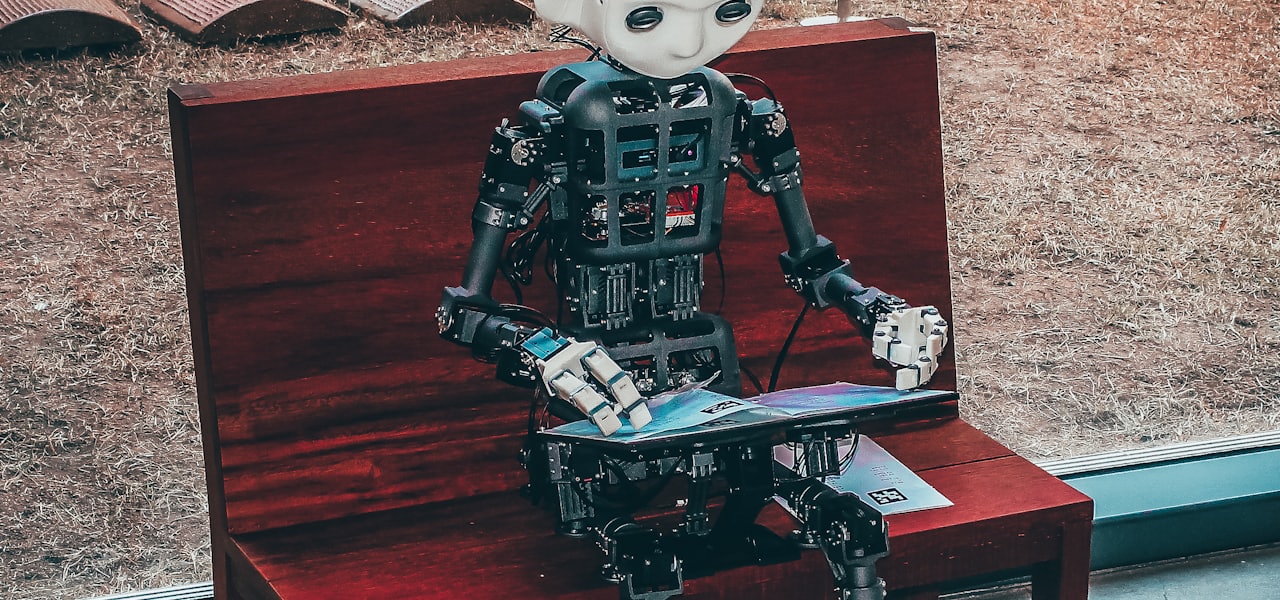
A smart speaker is a type of loudspeaker and voice command device with an integrated virtual assistant that offers interactive actions and hands-free activation with the help of one "wake word" (or several "wake words"). Some smart speakers also act as smart home hubs by using Wi-Fi, Bluetooth, Thread, and other protocol standards to extend usage beyond audio playback and control home automation devices connected through a local area network. == History == Early voice-activated devices began in 2013 with MIT's Jasper project, which used multiple microphones and cloud software to power hands-free interactions from across a room. The first commercial smart speaker was the Amazon Echo, which was released in 2014 powered by Alexa and a ring of far-field microphones. Google followed in 2016 with Home, powered by Google Assistant. By 2017, devices like the Echo Show and Home Hub (later called Nest Hub) added touchscreens and video, creating the "smart display" subcategory. In 2018, Apple joined the smart speaker trend by launching the HomePod, which focused on high-quality audio alongside their built-in assistant Siri. ASUS release its own smart Speaker Xiao-Bu in 2019 with Artificial Intelligence, it terminates the Cloud Service on June 1st, 2025, which means all real-time service such as weather, news, currency conversion is affected. Sonos's 1st smart speaker Sonos One released in 2017, powered by Alexa. Invoke by Harman Kardon was powered by Microsoft's intelligent personal assistant, Cortana. In the early 2020s, smart speakers gained on-device voice processing for faster responses and improved privacy. New standards such as Matter and Thread allowed multitudes of smart-home devices (even from completely different brands) to work together. == Features == === Audio and Voice === Smart speakers use multiple microphones along with noise-cancelling software to pick up your voice from across the room, even when music is playing or the assistant is already talking. Noise suppression and echo cancellation is also used by the speaker so it can focus in on who is talking and ignore any background noises. Most smart speaker models can recognize who is speaking by voiceprint, which allows the speaker to grab information from that person's calendar, preferences, or music playlists. Listening to music on a speaker is when importance for good audio quality becomes apparent. Entry-level (cheaper) speakers such as the Home Mini or the Echo Dot have a single full-range driver. These lower-end speakers typically aren't great for listening to music as the audio quality is pretty poor. More advanced units such as the Home Max or Echo Studio have separate tweeters and woofers meant for listening to music in high quality. === Connectivity and smart-home control === Most connect over Wi-Fi or Bluetooth and support hub protocols like Thread and Matter. That lets them not only stream and play music but also allows you to control various brands of smart lights, thermostats, door locks, cameras, and much more-all from one point of control. Each can have its own designated interface and features in-house, usually launched or controlled via application or home automation software. These devices are able to communicate with each other via peer-to-peer connection through mesh networking. These speakers and related smart devices are typically controlled with one smartphone application. === Assistant services and skills === The built-in assistants handle timers, alarms, reminders, news briefings, weather updates, send messages to other smart devices, send texts, make calls, and simple questions. You can combine actions together in what are typically known as routines (for example saying "good morning" turns on lights, starts the coffee, says the weather, and reads the news) and add extra functions known as skills or actions (for things like ordering food or playing trivia games). This hands-free use of smart speakers can help assist those with disabilities. Most other technologies need the user to be able to physically interact with the device. Smart speakers are not bound by these limitations and can serve as an excellent tool for those who are unable to use their arms or legs or have vision issues. Although these tasks can be completed by a phone or computer, consumers tend to lean towards smart speakers due to factors such as their range being much greater than that of a phone and the need to not have to physically interact with the speaker to get the voice assistant as with most smartphones, certain parts of a phone may need to be interacted with to activate the speaking assistant. === Smart displays === Some smart speakers also include a screen to show the user a visual response. A smart speaker with a touchscreen is known as a smart display; these integrate a conversational user interface with display screens to augment voice interaction with images and video. They are powered by one of the common voice assistants and offer additional controls for smart home devices, feature streaming apps, and web browsers with touch controls for selecting content. The first smart displays were introduced in 2017 by Amazon (Amazon Echo Show) and Google (Google/Nest Home Hub). Hotel chain Marriott International partnered with Amazon to install Echo devices in select hotels since 2018. A Taiwanese startup, Aiello, launched the Aiello Voice Assistant (AVA) in the Asian hotel market in 2019, claiming it is powered by a multi-AI model system. Angie by Nomadix, which is similar to the Amazon Echo, launched its first product in 2017, specifically targeting hotel properties in the North America. In May 2019, Angie Hospitality acquired the assets of Roxy, a competitor that also built its own speech-enabled virtual assistant technology for hotels. This acquisition merged two proprietary NLP stacks into the current Nomadix product. === Artificial intelligence === The newest speakers can use on-device AI or cloud-based generative models to allow the smart speaker to carry on much more natural conversations, draft emails or recipes, suggest ideas based on context, or even create short pieces of music or art. This AI evolution allows these speakers to do far more than what they could do before. == Accuracy == According to a study by Proceedings of the National Academy of Sciences of the United States of America released In March 2020, the six biggest tech development companies, Amazon, Apple, Google, Yandex, IBM and Microsoft, have misidentified more words spoken by "black people" than "white people". The systems tested errors and unreadability, with a 19 and 35 percent discrepancy for the former and a 2 and 20 percent discrepancy for the latter. The North American Chapter of the Association for Computational Linguistics (NAACL) also identified a discrepancy between male and female voices. According to their research, Google's speech recognition software is 13 percent more accurate for men than women. It performs better than the systems used by Bing, AT&T, and IBM. == Privacy concerns == The built-in microphone in smart speakers is continuously listening for wake words followed by a command. However, these continuously listening microphones also raise privacy concerns among users. According to a survey taken by 1,007 people in Western Europe, it is clear that privacy is the biggest concern holding consumers back from buying "smart" products. these concerns include what is being recorded, how the data will be used, how it will be protected, and whether it will be used for invasive advertising. Furthermore, an analysis of Amazon Echo Dots showed that 30–38% of "spurious audio recordings were human conversations", suggesting that these devices capture audio other than strictly detection of the wake word. === As a wiretap === There are strong concerns that the ever-listening microphone of smart speakers presents a perfect candidate for wiretapping. In 2017, British security researcher Mark Barnes showed that pre-2017 Echos have exposed pins which allow for a compromised OS to be booted. According to Umar Iqbal, an assistant professor at Washington University in St. Louis, research indicates that data from consumer interactions with Alexa was used to targeted advertisements and products to consumer with over 40% of transmitted data lacking proper encryption raising privacy concerns. Further data indicates that due to the Smart Speakers ability to always capture audio, it begins to pick up on external conversations from consumers not related to commands given to the smart speaker. Things such as other members in the household, consumers on the phone and even TV audio can be picked up by these speakers and stored for future use by companies. === Voice assistance vs privacy === While voice assistants provide a valuable service, there can be some hesitation towards using them in various social contexts, such as in public or around other users. However, only more recently have users begun interac
Semantic interpretation
Semantic interpretation is an important component in dialog systems. It is related to natural language understanding, but mostly it refers to the last stage of understanding. The goal of interpretation is binding the user utterance to concept, or something the system can understand. Typically it is creating a database query based on user utterance.
No Thanks (app)
No Thanks is a Palestinian boycott-awareness mobile application developed by Palestinian software engineer Ahmed Bashbash, created to assist consumers in identifying and boycotting products associated with companies linked to Israel. Launched in 13 November 2023, the app gained significant attention amid the Gaza–Israel conflict. == History == No Thanks is a mobile application developed by Ahmed Bashbash, a Palestinian software engineer from Gaza residing in Hungary. The app was conceived in October 2023 following the death of Bashbash's brother in an Israeli airstrike on October 31, 2023. His sister had previously died in 2020 due to delayed medical treatment. The app was officially launched on November 13, 2023, and quickly gained traction, got over 100,000 downloads within its first month of release. On November 30, 2023, Google removed the app from its Play Store due to a violation of its content policies. The app's home page included a description: "Welcome to No Thanks, here you can see if the product in your hand supports killing children in Palestine or not," which was deemed to contravene Google's guidelines on hate speech and sensitive content. On December 3, 2023, following changes to the app's description, Google reinstated the app.
Human Race Machine
The Human Race Machine (HRM) is a computerized console composed of four different programs. The Human Race Machine program allows participants to see themselves with the facial characteristics of six different races: Asian, White, African, Middle Eastern, and Indian, mapped onto their own face. The Age Machine allows viewers see an aged version of his or her face. A version of this methodology has been used for over twenty years by the FBI and the National Center for Missing and Exploited Children to help locate kidnap victims and missing children. The Couples Machine combines photographs of two people in different percentages to show the appearance of their child. The Anomaly Machine lets viewers see themselves with facial anomalies. The HRM was created by artist Nancy Burson and David Kramlich; it uses morphing technology. It was shown on Oprah on 2006-02-16.
TowIt
"TowIt" is a free, global, cross-platform mobile app, website, and Web API that allows civilians to report parking violations and dangerous driving in real-time. The mission is to remove the barriers required to make cities effectively fight and deter bad parking and dangerous driving habits. The company ultimately aims to better existing social controls in order to drive necessary behavioral change through increased education, real-time reporting, optimized enforcement, as well as the resulting reactivity. == User base and adoption == The application has users reporting vehicular infractions in upwards of 30 countries. The top reporting countries are: Portugal, Canada, United States of America and Australia. Users have adopted TowIt for a variety of reasons, usually central to their geographical location and the prominent offences in those specific areas. For instance, the majority of Portuguese reports are cars parked on sidewalks, footpaths and pedestrian crossings, Australian reports are largely focused on the abuse of disabled parking spaces, and in Toronto or San Francisco users generally capture cars parked in bicycle lanes. == Functions == === Data collection === TowIt gathers data on individual parking offences, the prominence of various offence types, as well as recurring offenders. This allows the company to identify trends and hotspots in order to take action against problem vehicles, as well as to help improve urban planning, traffic congestion and gridlock management. Individuals modify or improve an aspect of their behavior in response to their awareness of being observed, theoretically more so when demonstrating selfishness, egocentrism, narcissism and anti-social behavior. The company states that by becoming a user, one can "help TowIt relieve congestion, reduce collisions, open up economies, improve the environment and enhance the lives of urban residents and suburban commuters alike". The company has acknowledged that there are numerous legislative changes that would be required to integrate with governments at any level in many countries. A simple three-step process allows users to take a photo of an offending vehicle and subsequently verifying the offending vehicle's license plate information before submitting by tapping the TowIt (submit) button. Photographical evidence can only be captured with the camera from within the TowIt application. An Internet connection is required. The company has stated that this was purposefully done for quality control and report validation purposes. Users may only submit and view their own report history on either the iOS or Android applications. Globally submitted reports are displayed uncensored and in aggregate only on the Android application and the TowIt website. The "Global Feed" feature was removed from iOS (see iTunes Connect Acceptance Issues). TowIt's back-end automatically geotags the report and compares it to local parking by-law data, including by-law types, locations, times, side(s) of street, etc.- where available. Valid reports are posted to the global feed, to the TowIt website, and passed on to municipalities and police for enforcement (where connected). === Technologies used under license === TowIt currently utilizes the following software or software libraries under license: AngularJS, Apache Cordova, Apple iTunes Store EULA, Chart.js, Google Play Distribution Agreement, Ionic Framework, MongoDB, Moment.js, Python 2.7, Python Flask, and jQuery. == Company history == The TowIt application was conceived by Michael Duncan McArthur on December 5, 2014, as a response to Toronto Mayor John Tory's election mandate to "get this city moving". The application was announced via TowIt's official Twitter page on January 6, 2015. After the initial public announcement, Michael & Gregory were contacted by members of John Tory's staff on January 8, 2015, and invited to demo a prototype at Toronto City Hall on January 12, 2015. The two were also invited to meet with Toronto Councillor Norm Kelly, in his City Hall office, for a subsequent demo of the live Android application on January 28, 2015. A similar meeting and demo took place with members of the Traffic Services department of Toronto Police Service on February 2, 2015. Michael & Gregory teamed up with friends and Toronto-based developers Dae-Seon Moon, Jesse Malone, and Marcus Veres to complete the prototype in time to meet the city's imposed demo deadline and to launch the initial Android version of the application. TowIt officially launched on the Android platform on January 16, 2015. A subsequent iOS launch took place on March 19, 2015. === iTunes connect acceptance issues === The iOS version of the application was delayed for approximately two months, only after significant deliberation with Apple's iTunes Connect review board around (as then stated) rule: "14.1 - Any App that is defamatory, offensive, mean-spirited, or likely to place the targeted individual or group in harm's way will be rejected." The result was having to remove the "Global Feed" feature from the iOS platform, in which civilian users could view all recent reports from within the application. This feature still exists on the Android platform. === Business and legal === TowIt engaged Wildeboer Dellelce, one of Canada's leading business law and transactional corporate finance law firms, on January 17, 2015. The company filed for incorporation as "TowIt Solutions Inc." by both Michael & Gregory in the Canadian province of Ontario on January 22, 2015. TowIt continues to operate under a Freemium business model. The company is 100% bootstrapped and has received no outside investment to date. TowIt was accepted into the MaRS Discovery District's Venture Services program on March 4, 2015. === Lobbyist registration === After receiving initial press coverage in January and February 2015, an unknown entity reported Michael & Gregory's initial communications with city staff to the City of Toronto's Lobbyist Registrar. This complaint resulted in legal threats of fines received on February 10, 2015, for apparently and unknowingly breaking municipal lobbying by-laws. These fines (of up to $100,000) were eventually withdrawn after Michael & Gregory immediately provided all records of communication with city officials and registered as lobbyists in the City of Toronto on the subjects of By-law / Regulation, Parking, and Technology. Their registration was accepted by the Lobbyist Registrar on March 6, 2015. However, communication with Toronto city staff was reduced greatly as a result, which the company believes may have been the desired intent of the original complaint. === Outreach and activism === TowIt encourages its global user base to reach out to their local government representatives to promote the app at the users' own will. This tactic is used not only to demonstrate grassroots support, but also to avoid future lobbying issues. On June 2, 2015, the company officially partnered with Australian campaign "No Permit No Park" who advocate for the creation of inclusive communities. == Reception == The Best Planning Apps for 2016 by Planetizen, 5 Toronto apps you should be using by Indie88, 12 Best Apps Made In Canada by TechVibes.
Symbolic regression
Symbolic regression (SR) is a type of regression analysis that searches the space of mathematical expressions to find the model that best fits a given dataset, both in terms of accuracy and simplicity. No particular model is provided as a starting point for symbolic regression. Instead, initial expressions are formed by randomly combining mathematical building blocks such as mathematical operators, analytic functions, constants, and state variables. Usually, a subset of these primitives will be specified by the person operating it, but that's not a requirement of the technique. The symbolic regression problem for mathematical functions has been tackled with a variety of methods, including recombining equations most commonly using genetic programming, as well as more recent methods utilizing Bayesian methods and neural networks. Another non-classical alternative method to SR is called Universal Functions Originator (UFO), which has a different mechanism, search-space, and building strategy. Further methods such as Exact Learning attempt to transform the fitting problem into a moments problem in a natural function space, usually built around generalizations of the Meijer-G function. By not requiring a priori specification of a model, symbolic regression isn't affected by human bias, or unknown gaps in domain knowledge. It attempts to uncover the intrinsic relationships of the dataset, by letting the patterns in the data itself reveal the appropriate models, rather than imposing a model structure that is deemed mathematically tractable from a human perspective. The fitness function that drives the evolution of the models takes into account not only error metrics (to ensure the models accurately predict the data), but also special complexity measures, thus ensuring that the resulting models reveal the data's underlying structure in a way that's understandable from a human perspective. This facilitates reasoning and favors the odds of getting insights about the data-generating system, as well as improving generalisability and extrapolation behaviour by preventing overfitting. Accuracy and simplicity may be left as two separate objectives of the regression—in which case the optimum solutions form a Pareto front—or they may be combined into a single objective by means of a model selection principle such as minimum description length. It has been proven that symbolic regression is an NP-hard problem. Nevertheless, if the sought-for equation is not too complex it is possible to solve the symbolic regression problem exactly by generating every possible function (built from some predefined set of operators) and evaluating them on the dataset in question. == Difference from classical regression == While conventional regression techniques seek to optimize the parameters for a pre-specified model structure, symbolic regression avoids imposing prior assumptions, and instead infers the model from the data. In other words, it attempts to discover both model structures and model parameters. This approach has the disadvantage of having a much larger space to search, because not only the search space in symbolic regression is infinite, but there are an infinite number of models which will perfectly fit a finite data set (provided that the model complexity isn't artificially limited). This means that it will possibly take a symbolic regression algorithm longer to find an appropriate model and parametrization, than traditional regression techniques. This can be attenuated by limiting the set of building blocks provided to the algorithm, based on existing knowledge of the system that produced the data; but in the end, using symbolic regression is a decision that has to be balanced with how much is known about the underlying system. Nevertheless, this characteristic of symbolic regression also has advantages: because the evolutionary algorithm requires diversity in order to effectively explore the search space, the result is likely to be a selection of high-scoring models (and their corresponding set of parameters). Examining this collection could provide better insight into the underlying process, and allows the user to identify an approximation that better fits their needs in terms of accuracy and simplicity. == Benchmarking == === SRBench === In 2021, SRBench was proposed as a large benchmark for symbolic regression. In its inception, SRBench featured 14 symbolic regression methods, 7 other ML methods, and 252 datasets from PMLB. The benchmark intends to be a living project: it encourages the submission of improvements, new datasets, and new methods, to keep track of the state of the art in SR. === SRBench Competition 2022 === In 2022, SRBench announced the competition Interpretable Symbolic Regression for Data Science, which was held at the GECCO conference in Boston, MA. The competition pitted nine leading symbolic regression algorithms against each other on a novel set of data problems and considered different evaluation criteria. The competition was organized in two tracks, a synthetic track and a real-world data track. ==== Synthetic Track ==== In the synthetic track, methods were compared according to five properties: re-discovery of exact expressions; feature selection; resistance to local optima; extrapolation; and sensitivity to noise. Rankings of the methods were: QLattice PySR (Python Symbolic Regression) uDSR (Deep Symbolic Optimization) ==== Real-world Track ==== In the real-world track, methods were trained to build interpretable predictive models for 14-day forecast counts of COVID-19 cases, hospitalizations, and deaths in New York State. These models were reviewed by a subject expert and assigned trust ratings and evaluated for accuracy and simplicity. The ranking of the methods was: uDSR (Deep Symbolic Optimization) QLattice geneticengine (Genetic Engine) == Non-standard methods == Most symbolic regression algorithms prevent combinatorial explosion by implementing evolutionary algorithms that iteratively improve the best-fit expression over many generations. Recently, researchers have proposed algorithms utilizing other tactics in AI. Silviu-Marian Udrescu and Max Tegmark developed the "AI Feynman" algorithm, which attempts symbolic regression by training a neural network to represent the mystery function, then runs tests against the neural network to attempt to break up the problem into smaller parts. For example, if f ( x 1 , . . . , x i , x i + 1 , . . . , x n ) = g ( x 1 , . . . , x i ) + h ( x i + 1 , . . . , x n ) {\displaystyle f(x_{1},...,x_{i},x_{i+1},...,x_{n})=g(x_{1},...,x_{i})+h(x_{i+1},...,x_{n})} , tests against the neural network can recognize the separation and proceed to solve for g {\displaystyle g} and h {\displaystyle h} separately and with different variables as inputs. This is an example of divide and conquer, which reduces the size of the problem to be more manageable. AI Feynman also transforms the inputs and outputs of the mystery function in order to produce a new function which can be solved with other techniques, and performs dimensional analysis to reduce the number of independent variables involved. The algorithm was able to "discover" 100 equations from The Feynman Lectures on Physics, while a leading software using evolutionary algorithms, Eureqa, solved only 71. AI Feynman, in contrast to classic symbolic regression methods, requires a very large dataset in order to first train the neural network and is naturally biased towards equations that are common in elementary physics.
WebGPU Shading Language
WebGPU Shading Language (WGSL, internet media type: text/wgsl) is a high-level shading language and the normative shader language for the WebGPU API on the web. WGSL's syntax is influenced by Rust and is designed with strong static validation, explicit resource binding, and portability in mind for secure execution in browsers. In web contexts, WebGPU implementations accept WGSL source and perform compilation to platform-specific intermediate forms (for example, to SPIR‑V, DXIL, or MSL via the user agent), but such backends are not exposed to web content. == History and background == Graphics on the web historically used WebGL, with shaders written in GLSL ES. As applications demanded more modern GPU features and finer control over compute and graphics pipelines, the W3C's GPU for the Web Community Group and Working Group created WebGPU and its companion shading language, WGSL, to provide a secure, portable model suitable for the web platform. WGSL was developed to be human-readable, avoid undefined behavior common in legacy shading languages, and align closely with WebGPU's resource and validation model. == Design goals == WGSL's design emphasizes: Safety and determinism suitable for web security constraints (extensive static validation and well-defined semantics). Portability across diverse GPU backends via an abstract resource model shared with WebGPU. Readability and explicitness (no preprocessor, minimal implicit conversions, explicit address spaces and bindings). Alignment with modern GPU features (compute, storage buffers, textures, atomics) while retaining a familiar C/Rust-like syntax. == Language overview == === Types and values === Core scalar types include bool, i32, u32, and f32. Vectors (e.g., vec2, vec3, vec4) and matrices (up to 4×4) are available for floating-point element types. Optional f16 (half precision) may be enabled via a WebGPU feature; availability is implementation-dependent. Atomic types (atomic