Full Dive, short for Full Dive: This Ultimate Next-Gen Full Dive RPG Is Even Shittier than Real Life! (Japanese: 究極進化したフルダイブRPGが現実よりもクソゲーだったら, Hepburn: Kyūkyoku Shinka shita Furu Daibu RPG ga Genjitsu yori mo Kusogē Dattara), is a Japanese light novel series written by Light Tuchihi and illustrated by Youta. Media Factory has published four volumes since August 2020 under their MF Bunko J imprint. A manga adaptation with art by Kino was serialized in Media Factory's seinen manga magazine Monthly Comic Alive from January 2021 to January 2022. An anime television series adaptation by ENGI aired from April to June 2021. == Plot == Hiroshi Yuki, with the player name of Hiro, is a high school boy who loves to play virtual reality MMORPGs (VRMMORPG) in order to escape reality. When a game store manager named Reona Kisaragi tricks him into buying the game Kiwame Quest, he soon discovers that it is not what it seems. Unlike regular games, it is a game that tries to pursue realism to a fanatical point. As such, Hiroshi struggles to eke out a niche. Despite the disadvantages, he is determined to complete the game. == Characters == === Main characters === Hiroshi Yuki (結城宏, Yūki Hiroshi) Voiced by: Daiki Yamashita, Riho Sugiyama (young) (Japanese); Johnny Yong Bosch, Michele Knotz (young) (English) Hiroshi is a high school student who is tricked into buying Kiwame Quest by game store manager, Reona Kisaragi. He is a former member of the track team who quit following an unfortunate incident and he likes to play VRMMORPGs in order to escape reality. His player name is Hiro. Reona Kisaragi (如月玲於奈, Kisaragi Reona) Voiced by: Ayana Taketatsu (Japanese); Natalie Van Sistine (English) Reona is a game store manager who tricks Hiroshi into buying Kiwame Quest. She likes to tease him and her in-game avatar is that of a fairy. Alicia (アリシア, Arishia) Voiced by: Fairouz Ai (Japanese); Kayli Mills (English) Alicia is one of Hiroshi's childhood friends in Kiwame Quest. She has an older brother named Martin in-game. Mizarisa (ミザリサ) Voiced by: Shiori Izawa (Japanese); Sarah Anne Williams (English) Mizarisa is the town inquisitor in Kiwame Quest. Kaede Yuki (結城楓, Yūki Kaede) Voiced by: Aoi Koga (Japanese); Kate Bristol (English) Kaede is Hiroshi's younger sister. She used to look up to her older brother, but their relationship has been strained ever since he quit the track team. === NPCs === Martin (マーチン, Māchin) Voiced by: Haruki Ishiya, Natsumi Fujiwara (young) (Japanese); Ben Lepley, Krystal LaPorte (young) (English) Martin is one of Hiroshi's childhood friends in Kiwame Quest. He is also Alicia's older brother in-game. Tesla (テスラ, Tesura) Voiced by: Satoshi Hino (Japanese); Jason Liebrecht (English) Tesla is the captain of the City Guard in Kiwame Quest. Govern (ガバン, Gaban) Voiced by: Shizuka Itō (Japanese); Lisa Ortiz (English) Govern is the queen of Ted in Kiwame Quest. === Other characters === Ginji (ギンジ) Voiced by: Katsuyuki Konishi (Japanese); Brent Mukai (English) Ginji is a veteran player of Kiwame Quest. Soichiro Kamui (神居宗一郎, Kamui Sōichirō) Voiced by: Yoshitsugu Matsuoka (Japanese); Samuel Drake (English) Kamui is the only known player who has successfully completed Kiwame Quest. == Media == === Light novels === Light Tuchihi launched the light novel series, with illustrations by Youta, under Media Factory's MF Bunko J label on August 25, 2020. ==== Volumes ==== === Manga === A manga adaptation by Kino was serialized in Media Factory's Monthly Comic Alive magazine from January 27, 2021, to January 27, 2022. Two tankōbon volumes were released from May 21, 2021, to January 21, 2022. ==== Volumes ==== === Anime === An anime television series adaptation was announced on December 4, 2020. The series was animated by ENGI and directed by Kazuya Miura, with Kenta Ihara writing the series' scripts, and Yūta Kevin Kenmotsu designing the characters. It ran from April 7 to June 23, 2021, on AT-X, Tokyo MX, SUN, KBS Kyoto, and BS11. Mayu Maeshima performed the opening theme "Answer", while Ayana Taketatsu, Fairouz Ai, Shiori Izawa, and Aoi Koga performed the ending theme "Kisuida!". It ran for 12 episodes. Funimation licensed and streamed the series. On June 8, 2021, Funimation announced that the series would receive an English dub, which premiered the following day. Following Sony's acquisition of Crunchyroll, the series was moved to Crunchyroll. ==== Episodes ====
Key–value database
A key-value database, or key-value store, is a data storage paradigm designed for storing, retrieving, and managing associative arrays, a data structure more commonly known today as a dictionary. Dictionaries contain a collection of objects, or records, which in turn have many different fields within them. These records are stored and retrieved using a key that uniquely identifies the record, and is used to find the data within the database. Key-value databases differ from the better known relational databases (RDB). RDBs pre-define the data structure in the database as a series of tables containing fields with well-defined data types. Exposing the data types to the database program allows it to apply various optimizations. In contrast, key-value systems treat the value as opaque to the database itself, and typically support only simple operations such as storing, retrieving, updating, and deleting a value by its key. This offers considerable flexibility and makes such systems well suited to low-latency, high-throughput workloads dominated by direct key lookups, but less suitable for applications that require complex queries or explicit relationships among records. A lack of standardization, limited transaction support, and relatively simple query interfaces long restricted many key-value systems to specialized uses, but the rapid move to cloud computing after 2010 helped drive renewed interest in them as part of the broader NoSQL movement. Some graph databases, such as ArangoDB, are also key–value databases internally, adding the concept of relationships (pointers) between records as a first-class data type. == Types and examples == Key–value systems span a wide consistency spectrum, from eventually consistent designs to strongly consistent or serializable ones, and some allow the consistency level to be configured as part of the trade-off against latency and availability. Renewed interest in key–value and other NoSQL systems was driven in part by the demands of big data, distributed, and cloud applications. Their scalability and availability made them attractive for cloud data management, although limited transaction support, low-level query interfaces, and the lack of standardization remained obstacles to wider adoption. Some maintain data in memory (RAM), while others employ solid-state drives or rotating disks. Some key–value systems add additional structure to their keys. For example, Oracle NoSQL Database organizes records using composite keys with "major" and "minor" components, an arrangement that Oracle compares to a directory-path structure in a file system. More generally, however, key–value stores are defined by their use of unique keys associated with opaque values and by their emphasis on simple key-based operations. Unix included dbm (database manager), a minimal database library written by Ken Thompson for managing associative arrays with a single key and hash-based access. Later implementations and related libraries included sdbm, GNU dbm (gdbm), and Berkeley DB. A more recent example is RocksDB, a persistent key–value storage engine developed at Facebook and designed for large-scale applications. Other examples include in-memory systems such as Memcached and Redis, and persistent systems such as Berkeley DB, Riak, and Voldemort.
Semantic folding
Semantic folding theory describes a procedure for encoding the semantics of natural language text in a semantically grounded binary representation. This approach provides a framework for modelling how language data is processed by the neocortex. == Theory == Semantic folding theory draws inspiration from Douglas R. Hofstadter's Analogy as the Core of Cognition which suggests that the brain makes sense of the world by identifying and applying analogies. The theory hypothesises that semantic data must therefore be introduced to the neocortex in such a form as to allow the application of a similarity measure and offers, as a solution, the sparse binary vector employing a two-dimensional topographic semantic space as a distributional reference frame. The theory builds on the computational theory of the human cortex known as hierarchical temporal memory (HTM), and positions itself as a complementary theory for the representation of language semantics. A particular strength claimed by this approach is that the resulting binary representation enables complex semantic operations to be performed simply and efficiently at the most basic computational level. == Two-dimensional semantic space == Analogous to the structure of the neocortex, Semantic Folding theory posits the implementation of a semantic space as a two-dimensional grid. This grid is populated by context-vectors in such a way as to place similar context-vectors closer to each other, for instance, by using competitive learning principles. This vector space model is presented in the theory as an equivalence to the well known word space model described in the information retrieval literature. Given a semantic space (implemented as described above) a word-vector can be obtained for any given word Y by employing the following algorithm: For each position X in the semantic map (where X represents cartesian coordinates) if the word Y is contained in the context-vector at position X then add 1 to the corresponding position in the word-vector for Y else add 0 to the corresponding position in the word-vector for Y The result of this process will be a word-vector containing all the contexts in which the word Y appears and will therefore be representative of the semantics of that word in the semantic space. It can be seen that the resulting word-vector is also in a sparse distributed representation (SDR) format [Schütze, 1993] & [Sahlgreen, 2006]. Some properties of word-SDRs that are of particular interest with respect to computational semantics are: high noise resistance: As a result of similar contexts being placed closer together in the underlying map, word-SDRs are highly tolerant of false or shifted "bits". boolean logic: It is possible to manipulate word-SDRs in a meaningful way using boolean (OR, AND, exclusive-OR) and/or arithmetical (SUBtract) functions . sub-sampling: Word-SDRs can be sub-sampled to a high degree without any appreciable loss of semantic information. topological two-dimensional representation: The SDR representation maintains the topological distribution of the underlying map therefore words with similar meanings will have similar word-vectors. This suggests that a variety of measures can be applied to the calculation of semantic similarity, from a simple overlap of vector elements, to a range of distance measures such as: Euclidean distance, Hamming distance, Jaccard distance, cosine similarity, Levenshtein distance, Sørensen-Dice index, etc. == Semantic spaces == Semantic spaces in the natural language domain aim to create representations of natural language that are capable of capturing meaning. The original motivation for semantic spaces stems from two core challenges of natural language: Vocabulary mismatch (the fact that the same meaning can be expressed in many ways) and ambiguity of natural language (the fact that the same term can have several meanings). The application of semantic spaces in natural language processing (NLP) aims at overcoming limitations of rule-based or model-based approaches operating on the keyword level. The main drawback with these approaches is their brittleness, and the large manual effort required to create either rule-based NLP systems or training corpora for model learning. Rule-based and machine learning-based models are fixed on the keyword level and break down if the vocabulary differs from that defined in the rules or from the training material used for the statistical models. Research in semantic spaces dates back more than 20 years. In 1996, two papers were published that raised a lot of attention around the general idea of creating semantic spaces: latent semantic analysis from Microsoft and Hyperspace Analogue to Language from the University of California. However, their adoption was limited by the large computational effort required to construct and use those semantic spaces. A breakthrough with regard to the accuracy of modelling associative relations between words (e.g. "spider-web", "lighter-cigarette", as opposed to synonymous relations such as "whale-dolphin", "astronaut-driver") was achieved by explicit semantic analysis (ESA) in 2007. ESA was a novel (non-machine learning) based approach that represented words in the form of vectors with 100,000 dimensions (where each dimension represents an Article in Wikipedia). However practical applications of the approach are limited due to the large number of required dimensions in the vectors. More recently, advances in neural networking techniques in combination with other new approaches (tensors) led to a host of new recent developments: Word2vec from Google and GloVe from Stanford University. Semantic folding represents a novel, biologically inspired approach to semantic spaces where each word is represented as a sparse binary vector with 16,000 dimensions (a semantic fingerprint) in a 2D semantic map (the semantic universe). Sparse binary representation are advantageous in terms of computational efficiency, and allow for the storage of very large numbers of possible patterns. == Visualization == The topological distribution over a two-dimensional grid (outlined above) lends itself to a bitmap type visualization of the semantics of any word or text, where each active semantic feature can be displayed as e.g. a pixel. As can be seen in the images shown here, this representation allows for a direct visual comparison of the semantics of two (or more) linguistic items. Image 1 clearly demonstrates that the two disparate terms "dog" and "car" have, as expected, very obviously different semantics. Image 2 shows that only one of the meaning contexts of "jaguar", that of "Jaguar" the car, overlaps with the meaning of Porsche (indicating partial similarity). Other meaning contexts of "jaguar" e.g. "jaguar" the animal clearly have different non-overlapping contexts. The visualization of semantic similarity using Semantic Folding bears a strong resemblance to the fMRI images produced in a research study conducted by A.G. Huth et al., where it is claimed that words are grouped in the brain by meaning. voxels, little volume segments of the brain, were found to follow a pattern were semantic information is represented along the boundary of the visual cortex with visual and linguistic categories represented on posterior and anterior side respectively.
Artificial general intelligence
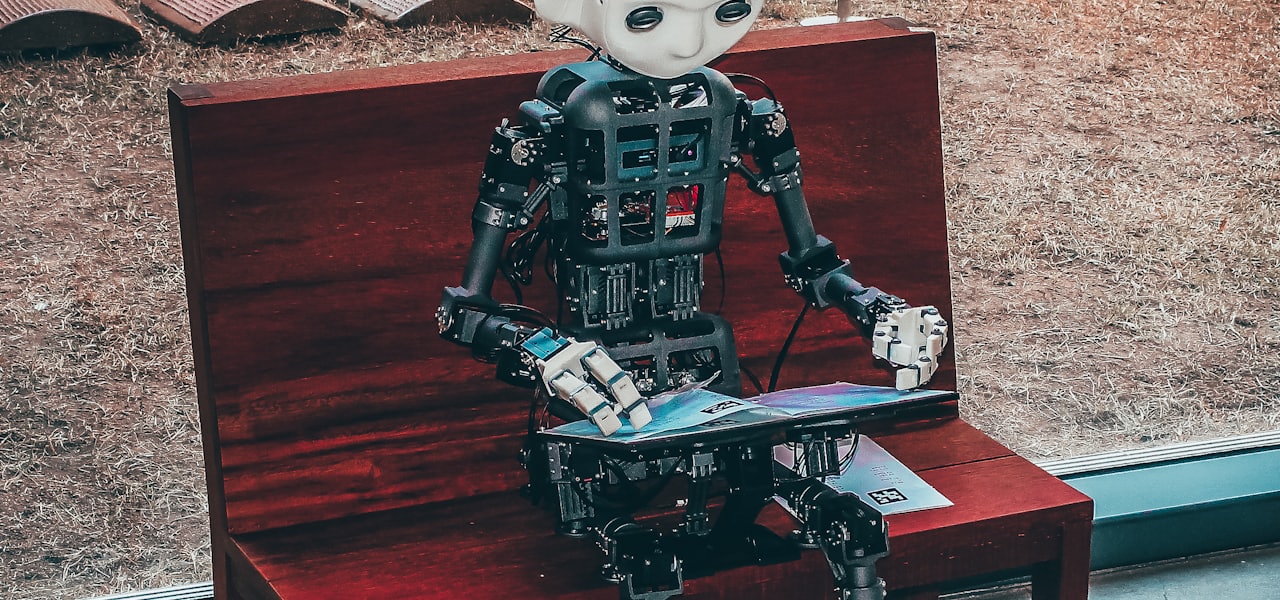
Artificial general intelligence (AGI) is a hypothetical type of artificial intelligence that matches or surpasses human capabilities across virtually all cognitive tasks. Beyond AGI, artificial superintelligence (ASI) would outperform the best human abilities across every domain by a wide margin. Unlike artificial narrow intelligence (ANI), whose competence is confined to well‑defined tasks, an AGI system can generalise knowledge, transfer skills between domains, and solve novel problems without task‑specific reprogramming. Creating AGI is a stated goal of technology companies such as OpenAI, Google, xAI, and Meta. A 2020 survey identified 72 active AGI research and development projects across 37 countries. AGI is a common topic in science fiction and futures studies. Contention exists over whether AGI represents an existential risk. Some AI experts and industry figures have stated that mitigating the risk of human extinction posed by AGI should be a global priority. Others find the development of AGI to be in too remote a stage to present such a risk. == Terminology == AGI is also known as strong AI, full AI, human-level AI, human-level intelligent AI, or general intelligent action. The term "artificial general intelligence" was used in 1997 by Mark Gubrud in a discussion of the implications of fully automated military production and operations. A mathematical formalism of AGI named AIXI was proposed in 2000 by Marcus Hutter, who defines intelligence as "an agent’s ability to achieve goals or succeed in a wide range of environments". This type of AGI has also been called "universal artificial intelligence". The term AGI was re-introduced and popularized by Shane Legg and Ben Goertzel around 2002. Some academic sources reserve the term "strong AI" for computer programs that will experience sentience or consciousness. In contrast, weak AI (or narrow AI) can solve a specific problem but lacks general cognitive abilities. Some academic sources use "weak AI" to refer more broadly to any programs that neither experience consciousness nor have a mind in the same sense as humans. Related concepts include artificial superintelligence and transformative AI. An artificial superintelligence (ASI) is a hypothetical type of AGI that is much more generally intelligent than humans, while the notion of transformative AI relates to AI having a large impact on society, for example, similar to the agricultural or industrial revolution. A framework for classifying AGI was proposed in 2023 by Google DeepMind researchers. They define five performance levels of AGI: emerging, competent, expert, virtuoso, and superhuman. For example, a competent AGI is defined as an AI that outperforms 50% of skilled adults in a wide range of non-physical tasks, and a superhuman AGI (i.e., an artificial superintelligence) is similarly defined but with a threshold of 100%. They consider large language models like ChatGPT or LLaMA 2 to be instances of emerging AGI (comparable to unskilled humans). Regarding the autonomy of AGI and associated risks, they define five levels: tool (fully in human control), consultant, collaborator, expert, and agent (fully autonomous). == Characteristics == There is no single agreed-upon definition of intelligence as applied to computers. Computer scientist John McCarthy wrote in 2007: "We cannot yet characterize in general what kinds of computational procedures we want to call intelligent." === Intelligence traits === Researchers generally hold that a system is required to do all of the following to be regarded as an AGI: reason, use strategy, solve puzzles, and make judgments under uncertainty, represent knowledge, including common sense knowledge, plan, learn, communicate in natural language, if necessary, integrate these skills in completion of any given goal. Many interdisciplinary approaches (e.g. cognitive science, computational intelligence, and decision making) consider additional traits such as imagination (the ability to form novel mental images and concepts) and autonomy. Computer-based systems exhibiting these capabilities are now widespread, with modern large language models demonstrating computational creativity, automated reasoning, and decision support simultaneously across domains. === Physical traits === Other capabilities are considered desirable in intelligent systems, as they may affect intelligence or aid in its expression. These include: the ability to sense (e.g. see, hear, etc.), and the ability to act (e.g. move and manipulate objects, change location to explore, etc.) This includes the ability to detect and respond to hazard. === Tests for human-level AGI === Several tests meant to confirm human-level AGI have been considered. ==== Turing test ==== The Turing test was proposed by Alan Turing in his 1950 paper "Computing Machinery and Intelligence". This test involves a human judge engaging in natural language conversations with both a human and a machine designed to generate human-like responses. The machine passes the test if it can convince the judge that it is human a significant fraction of the time. Turing proposed this as a practical measure of machine intelligence, focusing on the ability to produce human-like responses rather than on the internal workings of the machine. The idea of the test is that the machine has to try and pretend to be a man, by answering questions put to it, and it will only pass if the pretence is reasonably convincing. A considerable portion of a jury, who should not be experts about machines, must be taken in by the pretence. In 2014, a chatbot named Eugene Goostman, designed to imitate a 13-year-old Ukrainian boy, reportedly passed a Turing Test event by convincing 33% of judges that it was human. However, this claim was met with significant skepticism from the AI research community, who questioned the test's implementation and its relevance to AGI. A 2025 pre‑registered, three‑party Turing‑test study by Cameron R. Jones and Benjamin K. Bergen showed that GPT-4.5 was judged to be the human in 73% of five‑minute text conversations—surpassing the 67% humanness rate of real confederates and meeting the researchers' criterion for having passed the test. ==== Ikea test ==== The "Ikea test", also known as the Flat Pack Furniture Test, involves an AI controlling a robot which attempts to assemble an Ikea flat-pack furniture product after having been shown the parts and instructions. As early as 2013, MIT's IkeaBot demonstrated fully autonomous multi-robot assembly of an IKEA Lack table in ten minutes, with no human intervention and no pre-programmed assembly instructions. The robots inferred the assembly sequence from the geometry of the parts alone. ==== Coffee test ==== Steve Wozniak proposed a test where a machine is required to enter an average American home and figure out how to make coffee. It must find the coffee machine, find the coffee, add water, find a mug, and brew the coffee by pushing the proper buttons. This test has been substantially approached across multiple systems. In January 2024, Figure AI's Figure 01 humanoid learned to operate a Keurig coffee machine autonomously after watching video demonstrations, using end-to-end neural networks to translate visual input into motor actions. In 2025, researchers at the University of Edinburgh published the ELLMER framework in Nature Machine Intelligence, demonstrating a robotic arm that interprets verbal instructions, analyses its surroundings, and autonomously makes coffee in dynamic kitchen environments — adapting to unforeseen obstacles in real time rather than following pre-programmed sequences. ==== Suleyman's test ==== Mustafa Suleyman's test proposes giving an AI model US$100,000 and asking it to obtain US$1 million. ==== Use of video-games ==== Adams, et al. propose that the ability to learn and succeed in a wide range of video games can be used to test AI intelligence. This range would include games unknown to the AGI developers before the test is administered. === AI-complete problems === A problem is informally called "AI-complete" or "AI-hard" if it is believed that AGI would be needed to solve it, because the solution is beyond the capabilities of a purpose-specific algorithm. == History == === Classical AI === Modern AI research began in the mid-1950s. The first generation of AI researchers were convinced that artificial general intelligence was possible and that it would exist in just a few decades. AI pioneer Herbert A. Simon wrote in 1965: "machines will be capable, within twenty years, of doing any work a man can do". Their predictions were the inspiration for Stanley Kubrick and Arthur C. Clarke's fictional character HAL 9000, who embodied what AI researchers believed they could create by the year 2001. AI pioneer Marvin Minsky was a consultant on the project of making HAL 9000 as realistic as possible according to the consensus predictions of the time. He said in 1967, "Within a generation... the problem of
AI data center
An AI data center is a specialized data center facility designed for the computationally intensive tasks of training and running inference for artificial intelligence (AI) and machine learning models. Unlike general-purpose data centers, they are optimized for the parallel processing demands of AI workloads, typically using hardware such as AI accelerators (e.g., GPUs, TPUs) and high-speed interconnects. The global push to construct these specialized facilities accelerated dramatically during the AI boom of the 2020s. Memory manufacturers prioritized production of High Bandwidth Memory (HBM) essential for AI servers, which led to a global memory supply shortage amid a broader competition for advanced chips, power, and infrastructure. Major tech companies are estimated to spend $650 billion on AI data centers in 2026. == Architecture == Data centers for building and running large machine learning models contain specialized computer chips, GPUs, that use 2 to 4 times as much energy as their regular CPU counterparts (250-500 watts). AI data centers use 60 or more kilowatts per server rack, whereas more standard data centers typically use 5 to 10 kilowatts per rack. == Operators == As of August 2025, The Information tracked 18 planned or existing AI data centers in the United States, operated by Amazon Web Services, CoreWeave, Crusoe, Meta, Microsoft/OpenAI, Oracle, Tesla, and xAI. Other AI data center operators include Digital Realty and Alibaba. Data centers are also being built in China, India, Europe, Saudi Arabia, and Canada. The New Yorker described CoreWeave as the most prominent AI data center operator in the United States. Two types of data center providers for machine learning have been noted: hyperscalers and neoclouds. The Verge listed large technology companies such as Google, Meta, Microsoft, Oracle and Amazon as hyperscalers. The New York Times described neoclouds as "a new generation of data center providers". CoreWeave, Nebius, Nscale, and Lambda have been described as examples of neoclouds. In January 2025, OpenAI, in partnership with Oracle and Softbank, announced the Stargate project, which as of September 2025 is composed of six built or proposed AI data centers in the United States. In response to the Stargate project, Amazon launched in October 2025 an AI data center on 1,200 acres of farmland in Indiana. This data center, known as Project Rainier, is one of the largest AI data centers in the world, with Amazon spending $11 billion on the project. Rainier is specifically intended for training and running machine learning models from Anthropic. As of that time, this facility contains seven data centers (out of an estimated 30 planned) and will use 2.2 gigawatts of electricity (equivalent to 1 million households) and millions of gallons of water per year. Computer chips from Annapurna Labs and Anthropic, Trainium 2, were designed for use in such facilities. Amazon pumped millions of gallons of water out of the ground to construct the data center, and as of June 2025, Indiana state officials are investigating whether this dewatering process led to dry wells for local residents. In November 2025, Anthropic announced a plan in partnership with Fluidstack to develop artificial intelligence infrastructure in the United States, including data centers in New York and Texas, worth $50 billion. Other AI data center projects include the Colossus supercomputer from xAI, a Louisiana-based project from Meta, Hyperion, expected to use 5 GW of power, and a second Ohio-based Meta project, Prometheus, with a capacity of 1 GW. A 3,200-acre AI data center, capable of 4.4-4.5 GW of power and located on the decommissioned Homer City Generating Station, is under construction as of 2025, and will use seven 30-acre gas generating stations supplied by EQT. As of December 2025, CRH is working on over 100 data centers in the United States. In 2025, ExxonMobil and NextEra announced plans to build a data center powered by natural gas and using carbon capture technology, with 1.2 GW of power capacity. They previously purchased 2,500 acres of land in the Southeastern United States and plan to market the data center to an artificial intelligence company. The increased interest in AI data centers has led to several executives from companies in that space becoming billionaires, including CoreWeave, QTS, Nebius, Astera Labs, Groq, Fermi (which is connected to former United States Secretary of Energy Rick Perry), Snowflake and Cipher Mining. Several companies involved in cryptocurrency mining, such as Bitdeer, CoreWeave, Cipher Mining, TeraWulf, IREN, Core Scientific, and CleanSpark have also been involved with AI data centers. == Finances == Between January and August 2024, Microsoft, Meta, Google and Amazon collectively spent $125 billion on AI data centers. Citigroup forecasted that $2.8 trillion would be spent on AI data centers by 2030, while McKinsey and Company estimated that almost $7 trillion would be spent globally by that time. According to S&P Global, $61 billion has been spent on the data center market as a whole in 2025, while debt issuance for data centers was $182 billion during the same year. Large technology companies have offloaded the financial risks of building AI data centers by setting up special purpose vehicles or by contracting with neoclouds. For example, Meta's Hyperion was mostly funded by Blue Owl Capital, which did so using a bond offering from PIMCO. Those bonds were sold to a number of clients, including BlackRock. Meta did not borrow money itself and instead established a special purpose vehicle from which it would rent the data center. This deal was structured by Morgan Stanley for $30 billion, the largest known private capital transaction as of 2025. Neoclouds such as CoreWeave have gone into debt to buy computer chips from Nvidia for their data centers, and the chips themselves have been used for loan collateral. As of December 2025, CoreWeave took out three GPU-backed loans, collectively worth $12.4 billion, from private credit firms (Blackstone, Coatue, BlackRock, PIMCO) and from banks (Goldman Sachs, JPMorgan Chase, Wells Fargo). Thus, these companies provide an indirect connection between private credit and established banks. Data centers have also established asset-backed securities, and debt for data centers has its own derivative financial products. The real estate industry, including asset managers, public companies and private investors, has also invested in data centers. == Energy sourcing == == Environmental footprint == Average AI data centers have an electricity footprint equivalent to 100,000 households, and use billions of gallons of water for cooling their hardware. In 2025, the International Energy Agency estimated that the larger AI data centers currently under construction could consume as much electricity as 2 million households. A 2024 report from the United States Department of Energy stated that data centers overall used 17 billion gallons of water per year in the United States, primarily due to "rapid proliferation of AI servers", and that this usage was forecasted to grow to nearly 80 billion gallons by 2028. Researchers estimated that AI data centers in the United States would emit 24-44 million metric tons of carbon dioxide and use 731–1,125 million cubic meters of water per year between 2024 and 2030. Peaking power plants, which have been proposed as a power source for AI data centers, emit sulfur dioxide and have historically been located disproportionately near communities of color in the United States. Reciprocating internal combustion engines, proposed as another power source for a data center, emit PM 2.5, nitrogen oxides, and volatile organic compounds. == AI data centers in the United States == In the United States, both the Biden administration and second Trump administration supported the construction of AI data centers. In January 2025, then-president Joe Biden signed an executive order for federal government agencies to support AI data centers on federal sites built by private companies, study their effect on energy prices, and encourage their use of renewable energy. In April 2025, the United States Department of Energy suggested 16 possible sites, including Los Alamos National Laboratory, Sandia National Laboratories and Oak Ridge National Laboratory. In its July 2025 AI Action Plan, the second Trump administration supported increased production of AI data centers. Several US states have incentivized local data center construction. For example, in 2024, lawmakers in Michigan approved tax breaks for data center equipment and construction material. Some data center companies have also invested or promised to invest in the infrastructure of local communities. In December 2025, Democratic senators Elizabeth Warren, Chris Van Hollen, and Richard Blumenthal wrote to seven technology companies (Google, Microsoft, Amazon, Meta, CoreWeave, Digital Realty, and Equinix) that they w
Game Jolt
Game Jolt is a social community platform for video games, gamers and content creators. Founded by Yaprak and David DeCarmine, it is available on iOS, Android, and on the web and as a desktop app for Windows and Linux. Users share interactive content through a variety of formats including images, videos, live streams, chat rooms, and virtual events. == Features == === Crowd streaming === In 2021 Game Jolt revealed their own live streaming feature called Firesides. Firesides allowed multiple users to simultaneously livestream together with nearly no delay. The feature launched with a virtual concert showcasing its ability to accommodate multiple streamers. On October 16, 2023, Firesides were removed from Game Jolt. === Mobile app === Game Jolt Social by Game Jolt Inc. launched on both the Apple App Store and Google Play Store in March 2022. "It's clear to us that Gen Z is tired of generic social media and they want a place specifically for gaming that supports all types of content they're creating–art, videos, thoughts, and livestreams all in one place." said Game Jolt founder and CEO Yaprak DeCarmine, in a statement to VentureBeat. === Game API === The Game Jolt Application Programming Interface (usually known as the Game Jolt Game API) allows any developer using a game development platform that supports HTTP operations and MD5 or SHA-1. Game Jolt advertises that the API can: Create multiple "scoreboards" which collect high scores from players made publicly available on the game's profile and give user accounts EXP Award player's trophies which give user accounts EXP Store game data on Game Jolt's data servers Log whether a user is currently playing a game they're logged into via the GJAPI == Game jams and competitions == Game Jolt regularly hosts game jams where participants are encouraged to develop games for a chance to win prizes. They hosted their first game jam in 2009, Shocking Contest. In November 2014, Game Jolt announced the "Indies vs PewDiePie" game jam, partnering with the popular YouTuber Felix "PewDiePie" Kjellberg. Developers were given a weekend (21–24 November) to create a game with the theme of "fun to play, fun to watch" to suit the Let's Plays entertainment style. Users could rate entries afterwards until December 1 when the scores were counted up. The prize to the top 10 rated games was Felix playing the games on his channel as a means of promotion for the developers, although later he played other entries. One of the participants of the jam, now known as Outerminds Inc. was discovered and hired by PewDiePie to develop his mobile game, Legend of the Brofist. Game Jolt partnered with Felix, Sean "Jacksepticeye" McLoughlin and Mark "Markiplier" Fischbach to host "Indies vs Gamers" in July 2015. The requirements for entries were arcade games using the Game Jolt Game API highscore tables, to be made between the July 17–20 and the top 5 games were played on the partner's YouTube channels. Following the "Indies vs PewDiePie" game jam in 2014, Game Jolt released their internal jam hosting tools public for all users to use as a service, to create their own game jams that integrated with the main site. Today, Game Jolt focuses on hosting and co-hosting game competitions with established brands in order to bring monetary and educational opportunities to their users. On April 15, 2024, an announcement was made about a collaboration with Pocket Worlds for the "HighRise Game Jam". Pocket Worlds had sold NFTs up until roughly 2022, causing a community outburst. The situation was addressed, and the situation started to disperse. == Contests == == Events == Game Jolt hosts both physical and virtual events to entertain and prank its users, which consists of the following: == History == Game Jolt has supported independent creators with a central platform to manage their content and communities since its start in 2003. David DeCarmine began development of Game Jolt at the age of 14 for a group of hobbyists, making games and sharing on forums in an early iteration known as Holo World. The original intention was to create a platform for gamers where new games could be discoverable and quickly playable, and where feedback could be provided directly to the creators, allowing them to continue improving their games. In 2008, Game Jolt was registered as an LLC, then incorporated as Game Jolt Inc. in September 2020. A new site launched in 2015 featuring a responsive design, automated curation for both games and game news articles which weighs how recent a game was uploaded and how popular it is ("hot") and filtering options on game listings for platform, maturity rating and development status. In March 2022, Game Jolt launched a mobile application simultaneously on the Google Play Store and Apple App Store targeted at Gen Z gamers and creators. While in beta, the mobile app had 100,000 installs pre-launch. === Game store === Game Jolt continues to host a large library of independent games. Game developers can upload their games directly to the site to share or sell. They would allow distribution for downloadable games, later adding support for Adobe Flash, Unity and Java games which allowed support for browser based games. In February 2013, Game Jolt built support for browser-based HTML5 games as well. A user levelling system was released into public beta in April 2013, incorporating the GJAPI trophies and highscores, as well as site activity, to generate 'EXP' (experience points). Game Jolt Jams released in early 2014 as a service to allow users to create their own game jams that integrated with the main site. In April 2016, an online marketplace was announced and released the following month with an exclusive set of game titles, including Bendy and the Ink Machine, allowing developers to sell their games on the site. In January 2016, Game Jolt released source code of the client and site's front end on GitHub under MIT license. In January 2022, Game Jolt banned adult games from appearing on the site, stating in an email to developers that the site had become a "social media platform" and they "had to make decisions around the direction and future of the brand which has now included the removal of hosted games with explicitly adult content." In response to a tweet by Itch.io saying the site is not for prudes, they wrote in their own tweet: "Game Jolt is a platform with a large audience of 13-16 year olds. Our users asked us to clean up, so here we are." == Investments == After bootstrapping Game Jolt with revenue earned from ads on the website for years, the DeCarmines secured venture capital in 2020 from SoftBank, doing so again in 2021 from founders of Twitch, Rec Room, Modio and more.
Manifold hypothesis
The manifold hypothesis posits that many high-dimensional data sets that occur in the real world actually lie along low-dimensional latent manifolds inside that high-dimensional space. As a consequence of the manifold hypothesis, many data sets that appear to initially require many variables to describe, can actually be described by a comparatively small number of variables, linked to the local coordinate system of the underlying manifold. It is suggested that this principle underpins the effectiveness of machine learning algorithms in describing high-dimensional data sets by considering a few common features. The manifold hypothesis is related to the effectiveness of nonlinear dimensionality reduction techniques in machine learning. Many techniques of dimensional reduction make the assumption that data lies along a low-dimensional submanifold, such as manifold sculpting, manifold alignment, and manifold regularization. The major implications of this hypothesis is that Machine learning models only have to fit relatively simple, low-dimensional, highly structured subspaces within their potential input space (latent manifolds). Within one of these manifolds, it's always possible to interpolate between two inputs, that is to say, morph one into another via a continuous path along which all points fall on the manifold. The ability to interpolate between samples is the key to generalization in deep learning. == The information geometry of statistical manifolds == An empirically-motivated approach to the manifold hypothesis focuses on its correspondence with an effective theory for manifold learning under the assumption that robust machine learning requires encoding the dataset of interest using methods for data compression. This perspective gradually emerged using the tools of information geometry thanks to the coordinated effort of scientists working on the efficient coding hypothesis, predictive coding and variational Bayesian methods. The argument for reasoning about the information geometry on the latent space of distributions rests upon the existence and uniqueness of the Fisher information metric. In this general setting, we are trying to find a stochastic embedding of a statistical manifold. From the perspective of dynamical systems, in the big data regime this manifold generally exhibits certain properties such as homeostasis: We can sample large amounts of data from the underlying generative process. Machine Learning experiments are reproducible, so the statistics of the generating process exhibit stationarity. In a sense made precise by theoretical neuroscientists working on the free energy principle, the statistical manifold in question possesses a Markov blanket.